
Collect the application
Form-fills, document uploads, broker-channel submissions. The agent normalises the data and figures out which credit policy applies to this applicant for this product.
One engine for self-service and agent assist, powered by plain-language product knowledge.
Tightening an LTV cap. Adjusting income multiples. Adding a new sub-product for first-time buyers. Each of these is a credit committee decision that ought to be live by the next application — and instead becomes weeks of release-train work.
In the gap, every application uses the old policy. The committee made the right call; the technology kept the bank operating on the previous one.
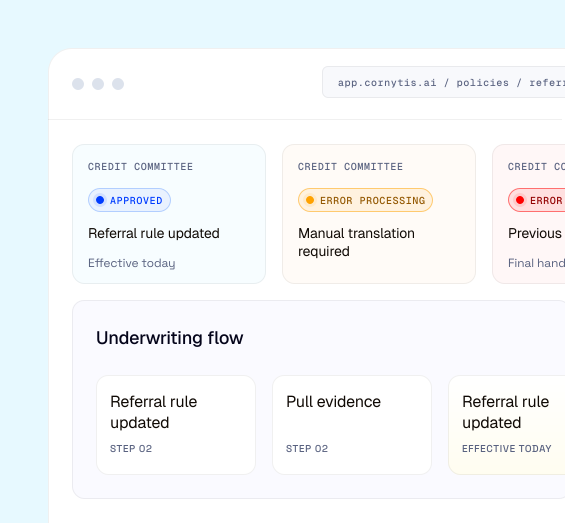
End-to-end consistency: the credit team writes the policy, the agent applies it every time.
Form-fills, document uploads, broker-channel submissions. The agent normalises the data and figures out which credit policy applies to this applicant for this product.
Credit bureau, open banking, employer verification, internal exposure. All in parallel, not sequentially — so the slowest external call sets the latency, not the sum of them.
The agent reads the active credit policy description and applies every rule it contains: hard knockouts, eligibility, affordability, exposure caps, product-specific overlays.
If the rules permit a clear answer, the agent returns it. If not, it packages a decision-ready file for the underwriter — with the rule that triggered the referral cited up top.

This is the file the agent uses, written in the language of the credit committee's minutes. When the committee meets next Tuesday to tighten the LTV cap, the analyst will update one number in this file. The next application will follow the new policy.
The point isn't faster origination. It's removing the latency between what your credit committee decides and what your origination platform actually does.
See Cornytis in action with a live walkthrough tailored to your operations.